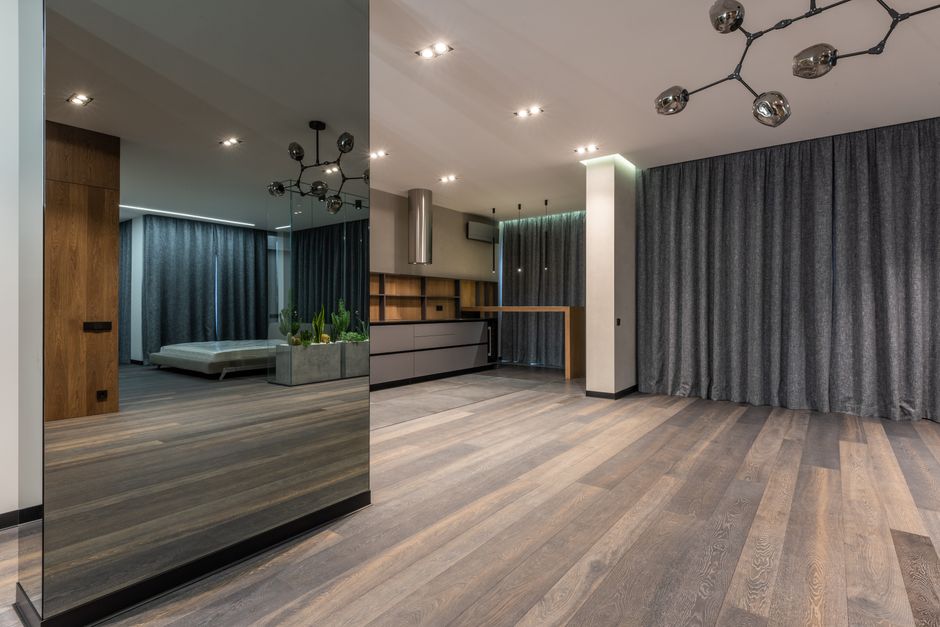
If you live in an apartment, you already know the struggle. Every footstep from upstairs sounds like a herd of elephants. Your downstairs neighbor knocks on the ceiling every time you walk to the kitchen. Floor noise is one of the most common — and most frustrating — noise problems in multi-unit buildings, and it travels in both directions. Whether you’re trying to block impact noise coming from above or reduce the sound you’re sending down to your neighbors below, soundproofing your apartment floor is absolutely possible, even as a renter. This guide breaks down exactly how to do it, with practical solutions ranked by effort, cost, and effectiveness.
Understanding Floor Noise: Impact vs. Airborne
Before you spend a dollar on materials, it helps to understand what type of noise you’re actually dealing with. Floor noise in apartments typically falls into two categories:
- Impact noise: This is caused by physical contact with the floor — footsteps, dropped objects, moving furniture, kids jumping. The vibration travels directly through the building’s structure, making it harder to block than airborne sound.
- Airborne noise: This includes voices, music, and TV sounds that travel through the air, pass through the floor, and radiate into the unit below.
Most apartment floor noise complaints involve impact noise, which is why a simple rug alone often isn’t enough. Effective soundproofing usually requires adding mass and decoupling layers to interrupt how vibration travels through the structure.
Renter-Friendly Floor Soundproofing Solutions
The good news for renters: you don’t need to tear up flooring or make permanent changes to see a real improvement. Most of the solutions below are completely reversible and won’t risk your security deposit.
1. Add Area Rugs with a Dense Rug Pad
This is the fastest, cheapest, and most renter-friendly solution available. A thick area rug adds mass to your floor and absorbs impact energy before it can vibrate through the subfloor. But the rug alone is only half the equation — the pad underneath is what does the heavy lifting.
Look for rug pads that are at least ¼ inch thick and made from dense rubber or felt-rubber combinations. Avoid thin foam pads; they compress easily and lose their noise-dampening ability fast. Cover as much floor area as possible, especially in high-traffic areas like hallways, living rooms, and bedrooms. If you’re serious about reducing impact noise transmission, layering a thick felt pad under a heavy wool or polypropylene rug is one of the most effective non-invasive moves you can make.
2. Use Mass Loaded Vinyl (MLV) Under Furniture or Flooring
Mass loaded vinyl is one of the most effective soundproofing materials available, and it works by adding dense, heavy mass to a surface without taking up much space. MLV is flexible, thin, and can be cut to fit any area. In an apartment context, you can lay it under rugs, under furniture, or even under a floating floor if you’re doing a renovation.
The Trademark Soundproofing Mass Loaded Vinyl is a solid choice for this application. It comes in various weights (1 lb per square foot is the standard for residential use) and is easy to cut with scissors or a utility knife. Lay it flat under a rug pad and rug combination for a multi-layer system that targets both impact and airborne sound. It’s not glamorous, but it works.
3. Rearrange and Add Soft Furnishings Strategically
Sound travels through hard surfaces and gets absorbed by soft ones. A bare-floor apartment is essentially a drum — every footstep resonates. Adding upholstered furniture, floor cushions, bookshelves filled with books, and fabric wall hangings all contribute to breaking up sound energy before it can travel through the floor structure.
This won’t eliminate impact noise on its own, but it’s a meaningful addition to a layered approach. Think of it as reducing the energy that makes it to the floor in the first place.
Tackling Noise from Above: What to Do When Your Upstairs Neighbor Is the Problem
When the noise is coming from above — footsteps, bass, children running — you’re dealing with a different challenge. You can’t control your neighbor’s floor, but you can absorb some of the sound energy that enters your space.
Acoustic Panels on Walls and Ceilings
Adding acoustic treatment to your walls and ceiling helps reduce the reverberation and echo that makes impact noise from above sound worse inside your apartment. Acoustic panels don’t block sound structurally, but they do reduce how much that noise bounces around your living space, making it noticeably less intrusive.
If you want treatment that actually looks good, the Art3d Wood Slat Acoustic Panels in Walnut are an excellent option. They mount to walls and provide real acoustic absorption while adding a warm, modern aesthetic to any room. For renters, many panel systems can be mounted with heavy-duty removable adhesive strips, making them deposit-safe. Place them on walls adjacent to the noise source or on a ceiling if you have the means to mount them.
White Noise Machines as a Supplemental Tool
This won’t soundproof your apartment, but it’s worth mentioning: a quality white noise machine can mask residual floor impact noise that your physical treatments can’t fully eliminate. It’s especially effective in bedrooms at night. Combine it with your physical treatments for the best overall result.
Semi-Permanent Solutions for Longer-Term Renters or Homeowners
If you’re planning to stay in your unit for several years, or if you own your home, you have access to more aggressive solutions that deliver dramatically better results.
Floating Floor with Acoustic Underlayment
Installing a floating floor — laminate, luxury vinyl plank, or engineered hardwood — over an acoustic underlayment is one of the most effective ways to reduce both impact and airborne noise through the floor. The key is the underlayment beneath the flooring, which decouples the walking surface from the subfloor and absorbs impact energy at the source.
For maximum performance, consider using Trademark Soundproofing Mass Loaded Vinyl as a base layer beneath your acoustic underlayment before installing floating floors. This combination adds both mass and decoupling, which addresses the two main transmission paths for floor noise. Always check with your landlord before installing any flooring over existing floors.
Acoustic Foam Panels in Utility or Studio Spaces
If you have a home studio, podcast setup, or a room where you need to control sound very precisely — and that room happens to be above another unit — acoustic foam on the walls helps reduce airborne sound from leaving the room through walls and floors. The GUERRI Acoustic Foam Wedge Panels 36-pack offers a cost-effective way to treat a room’s walls and reduce sound transmission. These work best for airborne noise control and room acoustics rather than structural impact noise, so pair them with physical floor treatments for the best results.
The Layered Approach: How to Get the Best Results
No single product or solution will completely soundproof an apartment floor. The professionals who do this for a living always use multiple layers, each targeting a different part of the noise transmission chain. Here’s a practical layering strategy you can apply as a renter:
- Layer 1 — Mass: Mass Loaded Vinyl laid flat on the floor
- Layer 2 — Decoupling/Absorption: A dense rubber or felt rug pad on top of the MLV
- Layer 3 — Surface: A thick, heavy area rug on top of the pad
- Layer 4 — Room Treatment: Acoustic panels on walls to reduce reverberation from any noise that does make it through
- Layer 5 — Soft Furnishings: Upholstered furniture and soft goods throughout the space to further absorb sound energy
Each layer reduces noise by a meaningful amount. Together, they can make a dramatic difference in how much floor noise you experience on a daily basis.
Talk to Your Landlord or Building Management
Before investing heavily in floor soundproofing, it’s worth having a direct conversation with your building manager. Many buildings have carpet requirements in upper-floor units specifically because of noise complaints. If your upstairs neighbor is the problem, the landlord may be able to require them to add rugs or padding. Some buildings will also allow — or even assist with — acoustic improvements, especially if noise complaints are ongoing. Document complaints in writing, and don’t assume the conversation will go nowhere before you’ve had it.
Conclusion
Soundproofing apartment floors doesn’t require a contractor or a major renovation. With the right combination of mass, absorption, and decoupling, most renters can significantly reduce both the noise they experience from above and the noise they send below. Start with a quality rug and pad system, add mass loaded vinyl for a meaningful upgrade, treat your walls with acoustic panels to control reverberation, and layer additional solutions as your budget and situation allow. Every layer helps — and in apartments, every decibel of reduction makes daily life noticeably better.
Frequently Asked Questions
Can I soundproof my apartment floor without losing my security deposit?
Yes. Area rugs, rug pads, and mass loaded vinyl placed under rugs are all completely reversible and won’t damage your flooring. Acoustic panels can also be mounted with removable adhesive strips in most cases. Always read your lease to confirm what modifications are allowed before doing anything more permanent.
What’s the most effective single product for reducing floor impact noise?
Mass loaded vinyl consistently delivers the best results for a single-product solution because it adds significant mass without major installation effort. Paired with a thick rug pad and rug, it’s highly effective for both impact and airborne noise reduction.
Will acoustic foam panels help with floor noise?
Acoustic foam panels like the GUERRI Acoustic Foam Wedge Panels help with room acoustics and airborne sound absorption, but they don’t block structural impact noise on their own. They work best as part of a layered approach rather than as a standalone floor solution.
How much can I realistically reduce floor noise in my apartment?
With a fully layered approach — MLV, dense rug pad, thick rug, acoustic panels, and soft furnishings — most apartment dwellers report a noticeable to significant reduction in both perceived impact noise and airborne noise. You won’t achieve studio-level silence, but everyday noise like footsteps and general movement can be reduced to a much more manageable level. Results vary based on building construction, existing flooring type, and how consistently you apply the solutions.
Affiliate Disclosure: This article contains affiliate links. If you make a purchase through these links, we may earn a small commission at no additional cost to you. This helps support Soundproofing Simplified and allows us to continue creating helpful guides. We only recommend products we genuinely believe will help.