If you’ve ever clapped your hands in an empty room and heard that hollow, reverberant slap bounce back at you, you already understand the problem. Echo and reverberation make rooms feel uncomfortable, make conversations harder to follow, and turn video calls into a frustrating mess of overlapping sound. Whether you’re in a bare apartment, a home office with hard floors, or a living room that sounds like a bathroom, the fix is more achievable than you think — and you don’t need to gut the walls to do it. This guide walks you through exactly how to reduce echo in a room using practical, renter-friendly, and budget-conscious solutions.
Why Do Rooms Echo in the First Place?
Before you start throwing rugs and foam at your walls, it helps to understand what’s causing the problem. Echo (and its close cousin, reverberation) happens when sound waves bounce off hard, flat surfaces instead of being absorbed. Every time a sound wave hits a bare wall, hardwood floor, or glass window, most of that energy reflects back into the room and mingles with new sounds. The result is a muddy, overlapping wash of noise that makes speech difficult to understand and music sound smeared.
The main culprits in most rooms are:
- Hard flooring (hardwood, tile, laminate, concrete)
- Bare walls with no art, shelving, or texture
- Large glass windows or sliding doors
- High ceilings with no treatment
- Minimal furniture, especially in newly moved-in spaces
The solution isn’t to block sound from entering — that’s soundproofing. What you’re doing here is acoustic treatment: adding materials that absorb, scatter, or diffuse sound waves so they stop bouncing around the room.
Start with the Floor: The Biggest Bang for Your Buck
Hard floors are often the single largest reflective surface in a room. Adding a large area rug — ideally paired with a thick rug pad underneath — can make a dramatic difference in how a room sounds. The thicker and denser the rug, the better it absorbs mid and low-frequency sound. A thin decorative rug over hardwood will help somewhat, but a plush, high-pile rug will perform significantly better.
If you’re in a studio apartment or a room with mostly open floor space, try to cover at least 50–60% of the floor area with soft materials. In a home office or recording space, getting closer to 80% coverage will yield noticeably better results.
Treat the Walls: Where Acoustic Panels Come In
Walls are where you have the most flexibility and where targeted acoustic treatment delivers the biggest improvement in sound quality. There are two main approaches: dedicated acoustic panels and everyday soft furnishings.
Acoustic Foam Panels
Acoustic foam is the most cost-effective way to reduce echo quickly, especially in home studios, podcasting setups, gaming rooms, or home offices. Foam panels work by converting sound energy into heat through friction as the sound waves pass through the open-cell structure. They’re particularly effective at absorbing mid and high frequencies — the range that contributes most to that harsh, “ringy” echo quality.
For a budget-friendly starting point, the GUERRI Acoustic Foam Wedge Panels 36-pack gives you enough coverage to treat a significant portion of a room without breaking the bank. A 36-pack is typically enough to cover a home studio corner setup or line two full walls of a smaller room. These wedge-style panels also scatter sound slightly better than flat panels, which helps avoid the “dead room” effect of over-treating a space.
Placement matters more than most people realize. Rather than papering an entire wall, focus on the first reflection points — the spots on the walls and ceiling where sound from your speakers (or voice) hits before reaching your ears. In a typical rectangular room, these are usually at ear level on the side walls and directly above the listening position.
Decorative Wood Acoustic Panels
Not everyone wants their living room or bedroom to look like a recording studio, and that’s a completely fair concern. Acoustic foam has a utilitarian look that doesn’t blend into most home décor. This is where wood slat acoustic panels have changed the game significantly in recent years.
These panels combine a slatted wood veneer face with an acoustic felt backing. The gaps between the slats allow sound to pass through to the absorptive backing, while the wood surface adds warmth and visual texture to the room. They look like high-end wall art and function as genuine acoustic treatment at the same time.
The Art3d Wood Slat Acoustic Panels in Walnut are a particularly popular choice for living rooms, home offices, and bedrooms where aesthetics matter. The walnut finish works with a wide range of interior styles, from modern minimalist to mid-century. Mounting them on the wall behind a couch, behind a desk, or as a feature wall panel can significantly reduce flutter echo while adding a polished, intentional look to the space. For renters, many of these panels can be mounted with heavy-duty removable adhesive strips rather than permanent hardware.
Furniture and Soft Furnishings: Free Acoustic Treatment You Might Already Have
One of the most underrated echo-reduction strategies is simply furnishing your room more fully. An empty room echoes because there’s nothing to absorb or scatter sound. Adding the right furniture and soft goods can quietly do a lot of the work without any dedicated acoustic product.
Here’s what to prioritize:
- Upholstered furniture: A fabric sofa or armchair absorbs significantly more sound than a leather or hard-surfaced equivalent. If you have a choice, go with fabric.
- Bookshelves filled with books: A full bookshelf is a surprisingly effective diffuser. The irregular surfaces of book spines scatter sound waves in multiple directions rather than reflecting them cleanly back into the room.
- Heavy curtains: Thick, floor-to-ceiling drapes over windows do double duty — they reduce echo and also help with outside noise. The heavier and more layered, the better.
- Throw pillows and blankets: These seem minor, but in aggregate they contribute to a room’s overall absorption, especially on couches and chairs that would otherwise be flat reflective surfaces.
- Plants: Leafy plants offer minimal but nonzero acoustic benefit by scattering sound slightly. More importantly, they add visual texture that breaks up flat wall surfaces.
Ceilings and Corners: Don’t Ignore These Problem Areas
Ceiling Treatment
High ceilings are a common echo culprit, especially in older apartments and open-plan spaces. If you can’t physically treat the ceiling (which is often true for renters), you can mitigate the effect by increasing absorption at every other surface to compensate. If you do have the option to add ceiling treatment, hanging fabric baffles or cloud panels above a seating or working area makes a significant acoustic improvement.
Bass Traps in Corners
Corners are where low-frequency sound accumulates most intensely, creating what’s called bass buildup. This is especially noticeable in home theaters, music rooms, and any space where you regularly listen to audio. Thick acoustic foam panels (at least 4 inches) or purpose-built bass traps placed floor-to-ceiling in room corners can clean up that boomy, muddy low-end quality that standard thin panels can’t address.
What About Mass Loaded Vinyl?
It’s worth clarifying where Trademark Soundproofing Mass Loaded Vinyl fits into an echo-reduction plan. Mass Loaded Vinyl (MLV) is primarily a soundproofing material — meaning it’s designed to block sound transmission through walls, floors, and ceilings rather than absorb echo within a room. However, it does have a role to play in certain echo scenarios.
If you’re dealing with sound bouncing off a thin, lightweight wall (such as a hollow-core door or a partition wall), adding a layer of MLV to that surface increases its mass and therefore its ability to both block and somewhat dampen sound reflection. It’s not a substitute for acoustic panels, but layering MLV behind a fabric wall hanging or under flooring can contribute to a quieter, less reverberant environment overall. It’s also a genuinely useful product if your echo problem is compounded by noise coming through the walls from neighbors — a situation many apartment dwellers know all too well.
Putting It All Together: A Room-by-Room Strategy
Rather than treating your whole home at once, focus on the rooms where echo is causing the most problems. Here’s a quick framework:
- Home office or studio: Prioritize acoustic foam on walls at reflection points, a rug on the floor, and heavy curtains on windows. Consider bass traps in corners if you’re mixing audio.
- Living room: Lead with a large area rug, upholstered furniture, and filled bookshelves. Add decorative wood acoustic panels on one wall for a significant upgrade that doesn’t compromise aesthetics.
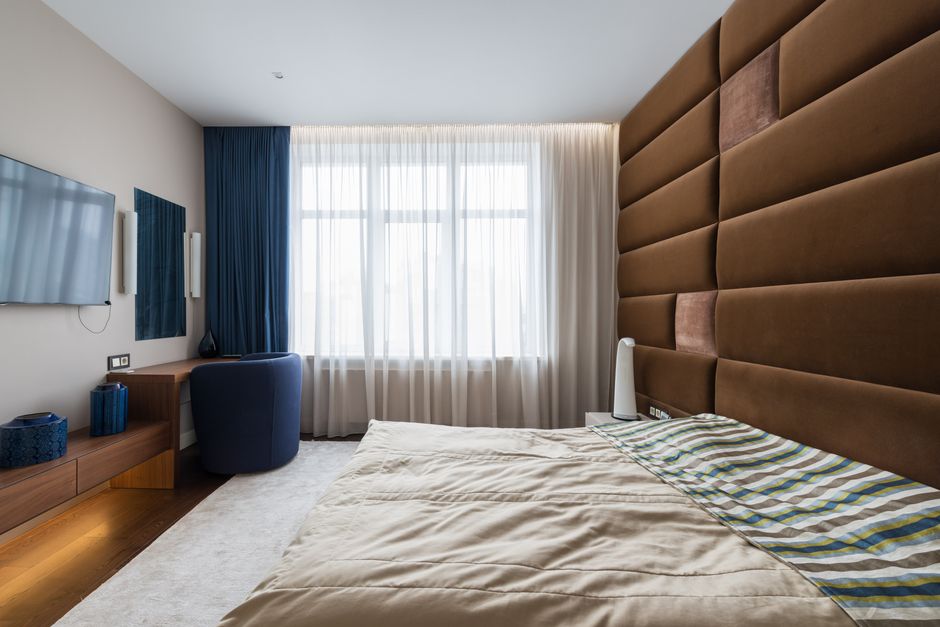
- Bedroom: A thick rug, fabric headboard, heavy curtains, and a closet full of clothes already do much of the work. Add a panel or two behind the bed if needed.
- Apartment with thin walls: Combine acoustic treatment for echo with MLV or dense furniture against shared walls to address both echo and noise bleed.
Conclusion
Reducing echo in a room doesn’t require a professional acoustic engineer or a major renovation. The core principle is simple: replace hard, reflective surfaces with soft, absorptive ones. Start with what’s most accessible — rugs, curtains, and furniture — then layer in dedicated acoustic treatment where you need the most improvement. Whether you go with foam panels for a functional workspace or decorative wood slat panels for a living area, there’s a solution that fits both your budget and your space. The difference in how your room sounds, and how much more comfortable it becomes to spend time in, is often remarkable.
Frequently Asked Questions
What’s the difference between echo and reverberation?
Echo is a distinct, audible repeat of a sound — like hearing your voice come back to you a moment after you speak. Reverberation is a more continuous wash of reflected sound that blurs and extends the original sound without creating a clear separate repeat. Most room acoustic problems are technically reverberation, though people often use the terms interchangeably. Both are addressed with the same absorption and diffusion strategies.
How many acoustic panels do I actually need?
There’s no single answer, but a common starting point is treating about 25–35% of your wall surface area for a home office or studio. For a living room or bedroom, even 15–20% coverage with strategic placement at reflection points can make a meaningful difference. Start with less and add more if the room still sounds too live — over-treating a room can make it sound unnaturally dead and fatiguing.
Can I reduce echo without putting anything on the walls?
Yes, to a significant degree. Thick rugs, heavy curtains, upholstered furniture, filled bookshelves, and fabric items all contribute to echo reduction without requiring any wall treatment. You likely won’t achieve the same results as a properly treated room, but for most everyday living spaces, soft furnishings alone can transform how a room sounds.
Will acoustic panels also block sound from my neighbors?
No — acoustic panels reduce echo and reverberation within a room, but they don’t block sound from traveling through walls. Soundproofing (blocking) and acoustic treatment (absorbing) are different goals that require different solutions. If neighbor noise is your primary concern, look into mass loaded vinyl, door seals, and adding mass to shared walls in addition to any acoustic treatment you apply.
Affiliate Disclosure: This article contains affiliate links. If you make a purchase through these links, we may earn a small commission at no additional cost to you. This helps support Soundproofing Simplified and allows us to continue creating helpful guides. We only recommend products we genuinely believe will help.